

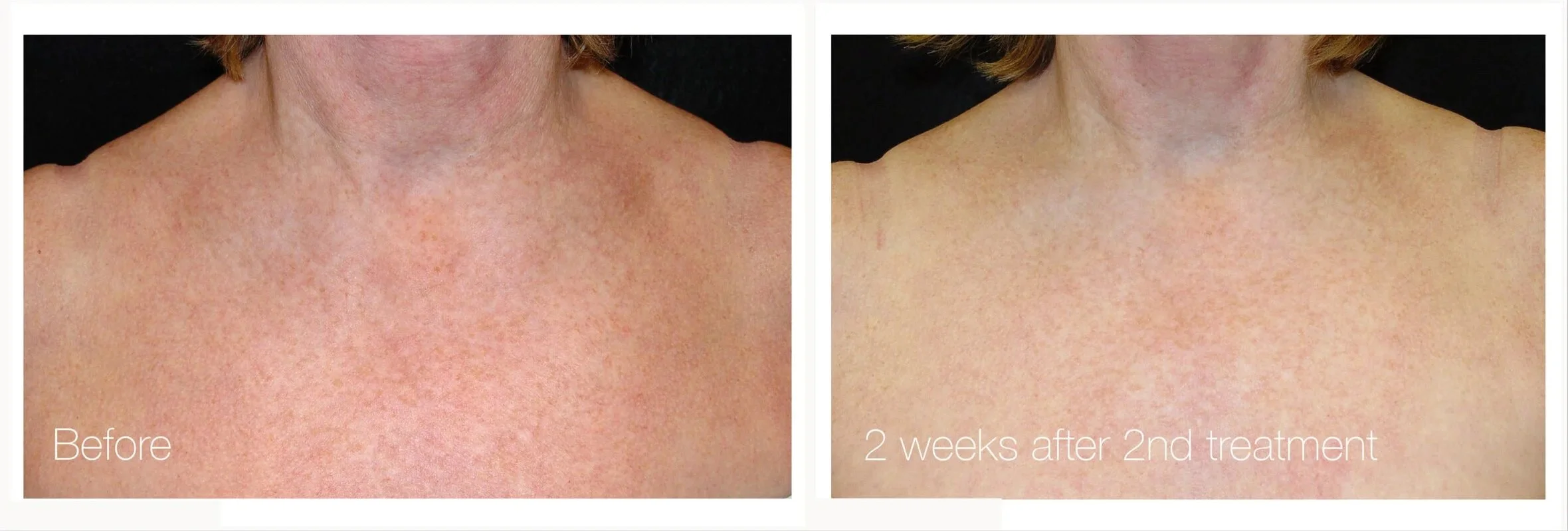
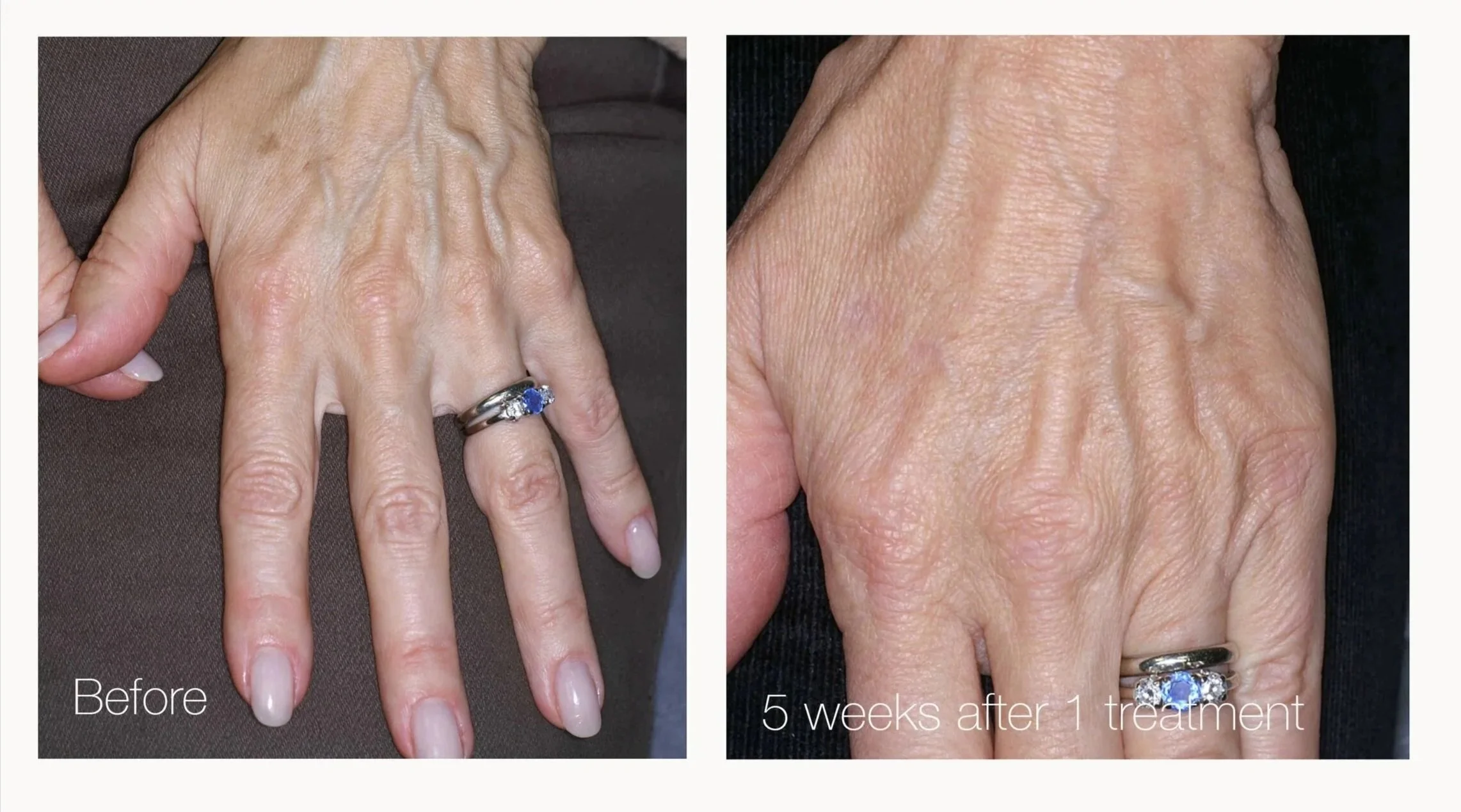
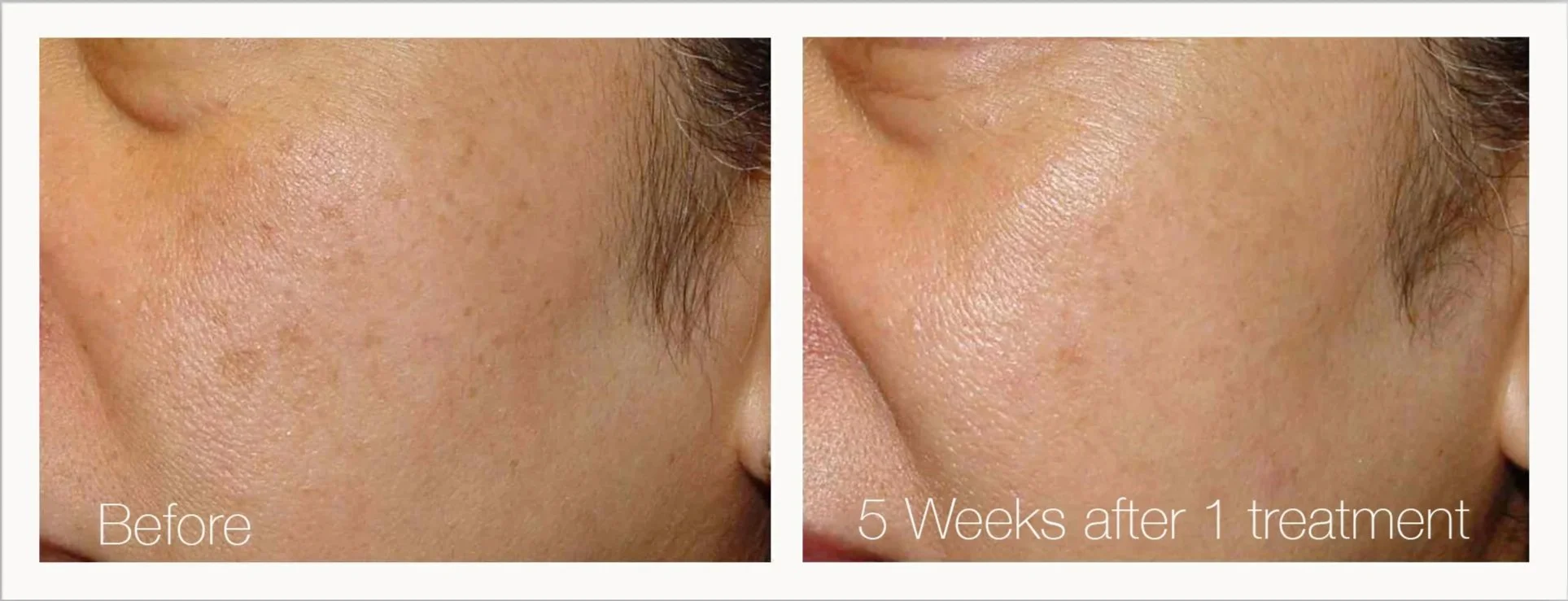
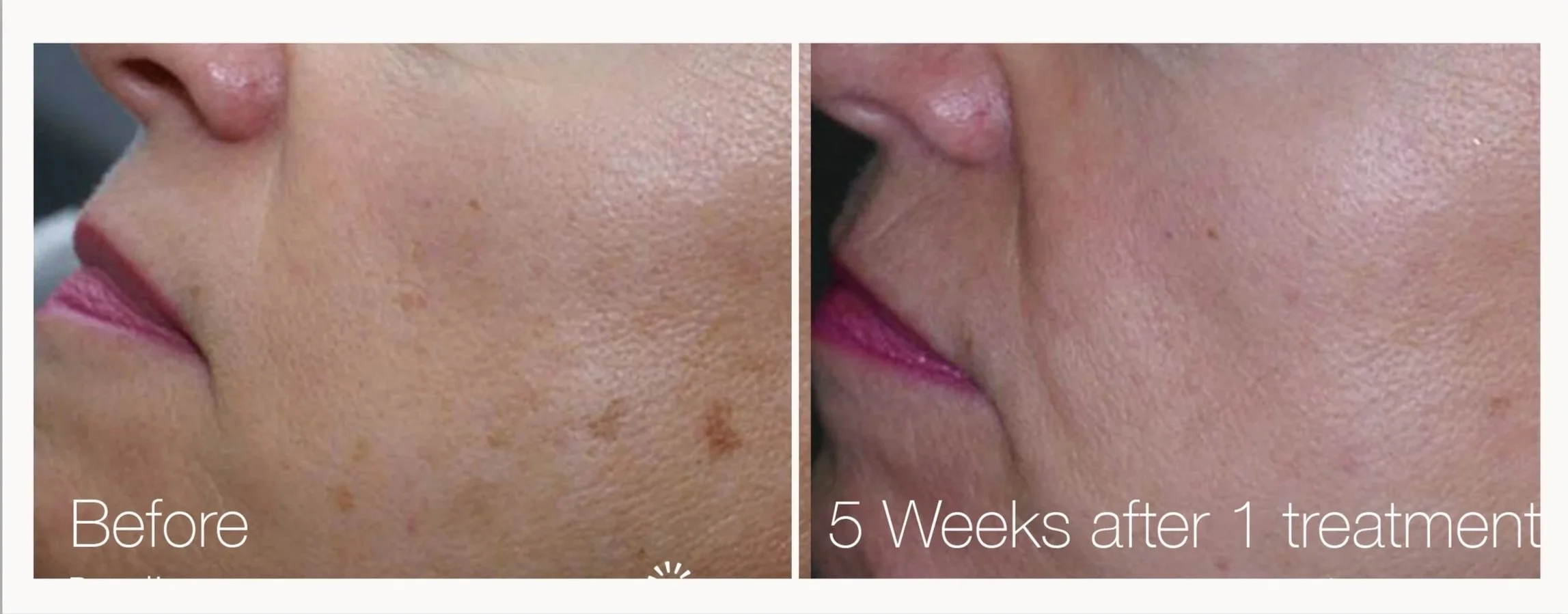
BEFORE AND AFTERS


CHANGE


YOU CAN SEE

The Science
Limelight IPL delivers broad-spectrum light energy in controlled pulses across the skin — but unlike a laser (which uses a single wavelength), IPL emits a range of wavelengths simultaneously. This allows it to target multiple chromophores — the specific pigments that absorb light — in a single treatment session. The two primary targets are hemoglobin (the red pigment in blood vessels) and melanin (the brown pigment in sun damage and age spots).
Target 01 — Hemoglobin
IPL energy is absorbed by oxyhemoglobin in dilated blood vessels — the capillaries responsible for facial redness, flushing, rosacea, and broken capillaries. The absorbed energy heats the vessel wall, causing it to collapse and be reabsorbed naturally by the body. Over 1–3 sessions, diffuse redness clears and vascular irregularities fade progressively.
Target 02 — Melanin
IPL energy is simultaneously absorbed by melanin in sun spots, age spots, and areas of uneven pigmentation. The concentrated pigment heats and is selectively destroyed — rising to the surface as a darker "coffee ground" appearance over 7–10 days before naturally flaking off, revealing clearer skin beneath.
Full Indication Guide
Persistent facial redness, broken capillaries, and visible superficial vessels respond exceptionally well to Limelight IPL. The broad-spectrum light targets the hemoglobin in these vessels — collapsing them without disrupting the surrounding skin surface. Results are visible within 1–2 weeks as the body clears treated vessels.
For patients with generalized facial redness from chronic sun exposure, environmental factors, or early vascular changes, Limelight IPL delivers noticeable overall tone improvement in a single full-face session.
Specific Concerns Treated
Brown spots and sun damage from years of UV exposure respond dramatically to Limelight IPL. The melanin in these pigmented areas absorbs the IPL energy preferentially — heating and destroying the concentrated pigment while leaving surrounding skin largely unaffected. Treated spots will temporarily darken before flaking off over 7–14 days — a reliable sign the treatment worked.
Full-face treatment in a single session addresses both isolated spots and overall diffuse uneven tone — making IPL one of the most efficient pigmentation treatments for lighter skin types.
Specific Concerns Treated
Rosacea is a chronic vascular condition — persistent redness and flushing caused by chronically dilated facial capillaries that no longer constrict normally. Limelight IPL targets the hemoglobin in these dilated vessels, progressively reducing the vascular network driving the redness over a series of treatments.
Rosacea cannot be permanently cured — but Limelight IPL can significantly reduce visible redness and flushing frequency, with results lasting months and improving cumulatively across a series. Maintenance treatments help sustain improvement as new vascular changes develop.
Specific Concerns Treated
Sun damage doesn't stop at the jawline. The neck, chest, hands, and arms accumulate decades of UV exposure — and Limelight IPL addresses these areas just as effectively as the face. Many patients find that treating the face without the neck and chest creates a visible contrast that undermines the full result.
The Limelight's large handpiece covers body areas efficiently — the full décolleté can typically be treated in a single pass, making combined face and body sessions both practical and time-efficient.
Body Treatment Areas
The Treatment Experience
Day of Treatment
Each pulse feels like a warm snap or mild sting. Immediately after, the face appears flushed and feels warm — similar to a sunburn. Brown spots may look darker. Redness in vascular areas is normal. This resolves within hours.
Days 1–3
Warmth and redness subside. Brown spots continue to darken and develop a textured appearance — this is expected. Avoid picking or rubbing. Keep skincare gentle and SPF applied. Most patients look presentable within 24–48 hours.
Days 7–14
Darkened pigmented lesions naturally flake off as the skin sheds treated pigment cells. Vascular redness begins to visibly reduce as cleared vessels are reabsorbed. Overall skin tone starts to look noticeably more even.
Weeks 2–4
The complete outcome of each session becomes visible at 2–4 weeks. Brown spots are cleared or significantly lighter. Redness is reduced. Overall tone is more uniform. Assessment for follow-up sessions is typically done at this point.
Important — skin type candidacy: Limelight IPL is most effective and safest for Fitzpatrick skin types I–III (fair to medium skin tones). Because IPL targets melanin, patients with naturally darker skin tones (types IV–VI) carry a higher risk of inadvertent pigmentation changes. For patients with darker skin who want vascular or pigmentation treatment, the Motus AZ+ 1064nm is the safer and more appropriate alternative. Your provider will assess your Fitzpatrick type at consultation and recommend the right device for your skin. Patients should also arrive at their appointment without active tan or recent self-tanner — treated skin must be at its natural baseline for safe settings.
Pre & Post Care
Questions Answered
Each light pulse delivers a warm snapping sensation — often compared to a light rubber band flick against the skin. A cooling gel is applied before treatment and the Limelight handpiece has integrated cooling to improve comfort. No numbing cream is typically required. Most patients find the sensation very manageable, though areas with more visible vessels or concentrated pigment may feel slightly more noticeable.
Yes — and this is one of Limelight IPL's most valuable qualities. The broad-spectrum light simultaneously targets both hemoglobin (reds) and melanin (browns) in a single pass. For patients with combined sun damage — which almost always includes both redness and pigmentation — this means addressing the full picture of skin concern in one appointment rather than requiring separate treatments for each.
Yes — completely normal and expected. When IPL energy destroys the melanin in a brown spot, the damaged pigment cells rise to the skin's surface before being shed. This creates a temporary darkening and sometimes a slightly textured appearance over days 3–10. Do not pick or rub these areas — let them shed naturally. Once they flake off, the skin beneath is visibly clearer. The darkening is actually a reliable indicator the treatment worked.
A laser emits a single, precise wavelength of light — highly effective at one specific target. IPL emits a broad spectrum of wavelengths simultaneously, allowing it to target multiple chromophores (hemoglobin and melanin) at once. This makes IPL more versatile for patients with mixed concerns — redness and brown spots together — and allows full-area treatment rather than spot-by-spot targeting. Lasers tend to be more precise for isolated single targets (a specific vessel or spot); IPL is more efficient for widespread, diffuse concerns across a large treatment area.
Yes — and we strongly encourage it. Sun damage accumulates on all exposed areas, not just the face. The neck, chest, and hands in particular show significant age-related sun damage that creates a visible contrast with a treated face. Treating these areas in the same session as the face produces a far more cohesive, natural-looking overall result. The Limelight's large handpiece makes body area treatment time-efficient and comfortable.
Treated vessels and pigmented lesions are permanently cleared — they don't return. However, new sun damage, new vascular changes, and rosacea progression continue to develop over time with ongoing UV exposure and aging. Annual or biannual maintenance sessions sustain results and address new changes as they appear. Consistent daily SPF is the single most important thing a patient can do to slow the development of new damage between sessions.
Book a consultation at Laser Vantage — we'll assess your skin, identify the right Limelight IPL protocol for your specific concerns, and set honest expectations for your results.
Book a ConsultationIndividual results may vary. Limelight IPL is best suited for Fitzpatrick skin types I–III. Active tan or self-tanner must be fully resolved before treatment. A consultation is required prior to all IPL treatments.